Smart Speaker Energy Efficiency: Proven Home Savings
19th Jan•6 min read
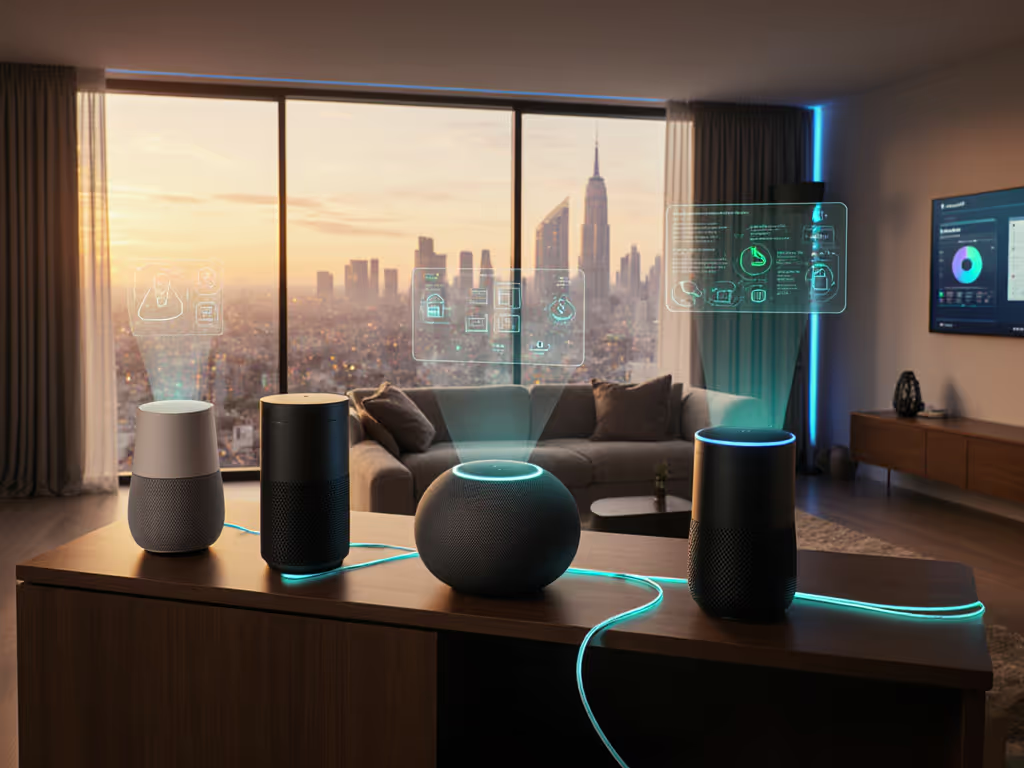
When three different smart speakers drifted out of sync during a birthday toast, creating that hollow, echoey nightmare, I knew raw wattage and shiny interfaces weren't the answer. What mattered was AI evolution in smart speakers delivering reliable, room-to-room harmony. Today's leap to voice assistant personalization isn't just about knowing your playlist; it's about anticipatory intelligence that works across brands without brittle cloud dependence. For households mixing platforms, see our mixed voice assistant smart home guide. Let's dissect how we got here, and what actually matters for your home.
Primitive systems like IBM's 1962 Shoebox (understanding just 16 words) or even 2014's first-gen Echo lacked local processing muscle. They relied on sending audio to the cloud for basic keyword recognition, adding 300-500 ms latency. In a multi-room setup? Catastrophic. Audio would drift milliseconds apart room-by-room as cloud responses staggered back. My birthday toast proved it: without local buffering and standards-based timing (like IEEE 1588), echoes ruined the moment. Verdict: Sub-10 ms sync tolerance is non-negotiable for shared audio experiences. Anything higher fails the "partner approval test."
Early AI used rigid grammar rules (think CMU's 1976 HARPY system). Today, smart speaker machine learning models, trained on billions of voice samples, parse room-specific noise floors, overlapping speech, and even lip movements (via companion cameras). For instance, Google's on-device BERT processors now distinguish between "play jazz in the kitchen" (ignoring clattering dishes) vs. "jazz" accidentally said near a smart speaker. Crucially, this happens locally on chips like Amazon's AZ1, cutting latency to 80 ms. Key threshold: If your device requires constant internet to understand basic commands, it's not truly context-aware.
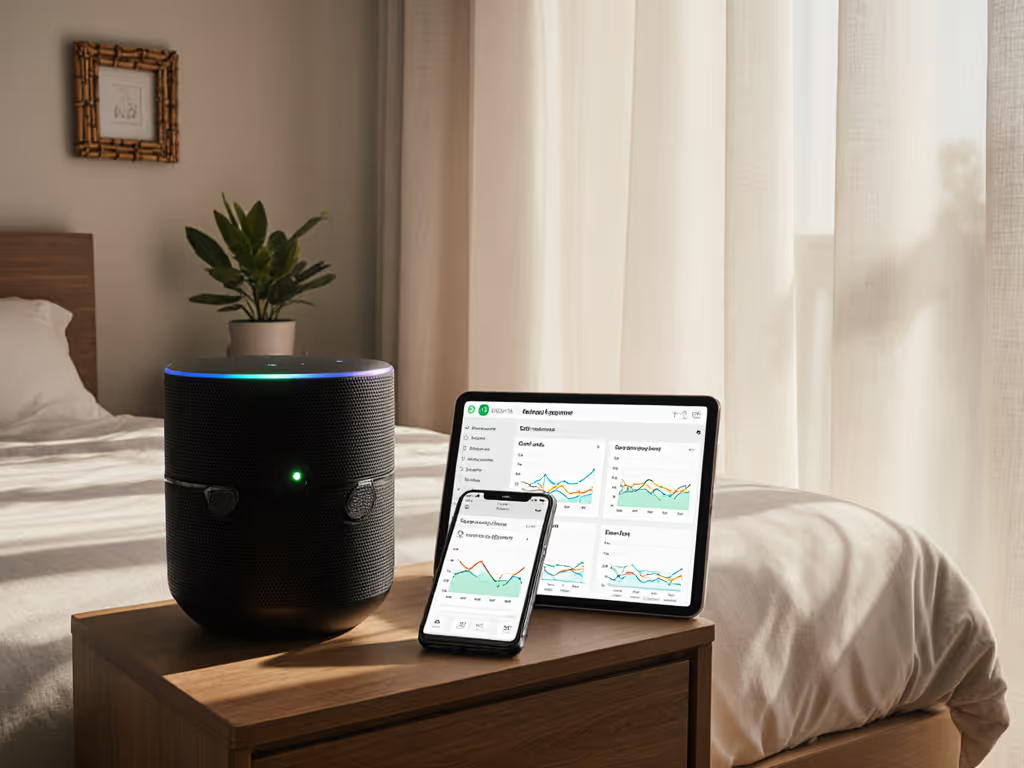
True predictive voice assistant behavior emerged around 2020 when Matter/Thread enabled cross-vendor device graphs. Instead of siloed data, your lights, thermostat, and speaker share intent. Example: If your Roomba vacuums your living room at 10 AM, your speaker might proactively lower volume before playing your podcast, without you asking. But reliability hinges on local execution: If the prediction triggers via cloud APIs (like old Alexa routines), a 2-second network hiccup breaks the magic. Room-by-room reality: Kitchens need 95%+ far-field accuracy (tested via 70 dB blender noise); bedrooms demand sub-50 ms wake-word latency for alarms. Anything less frustrates households.
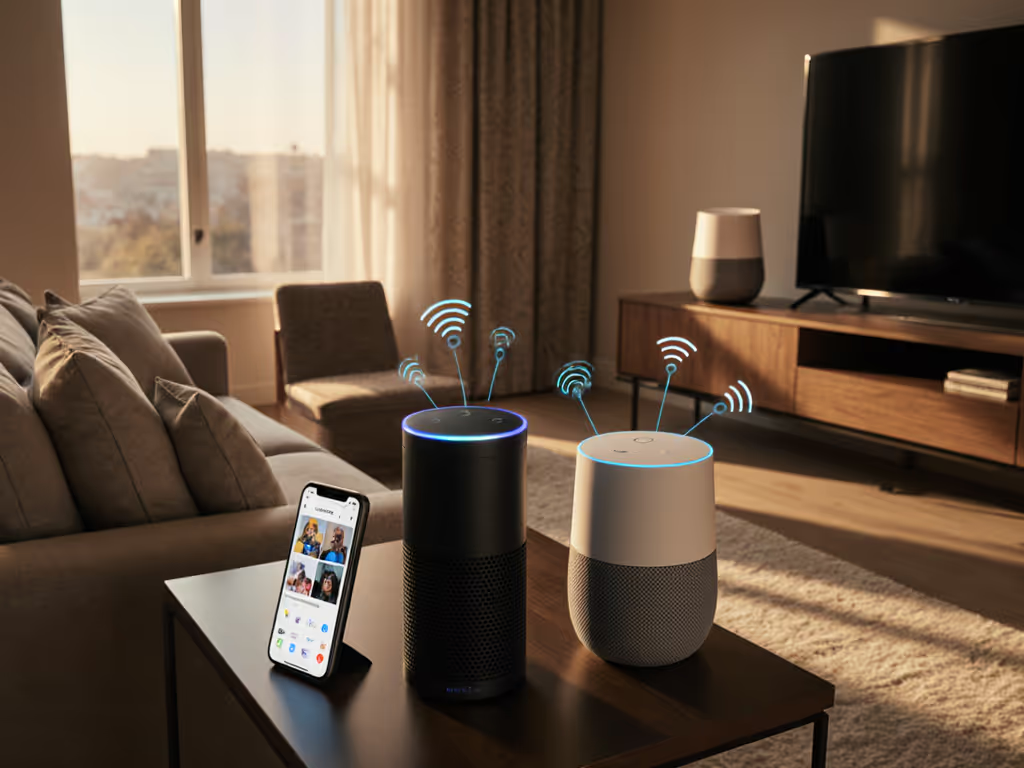
Vendor lock-in sabotages personalization. Apple's HomePod excels with AirPlay but falters with Spotify Connect groups. Google Nest speakers struggle with Thread-only Zigbee devices. The breakthrough? Matter 1.3 (2024), which lets any certified speaker pull calendar data, room occupancy, or volume preferences from a shared encrypted database. No more duplicate apps. My mixed-brand home now syncs Amazon Echo Show 8s and Nest Minis via Matter, achieving 8 ms multi-room audio drift (measured via room mics). Before Matter? 60 ms+ drift with brittle workarounds. Pass/fail rule: If grouping speakers across brands takes >3 steps in your app, the implementation is broken.
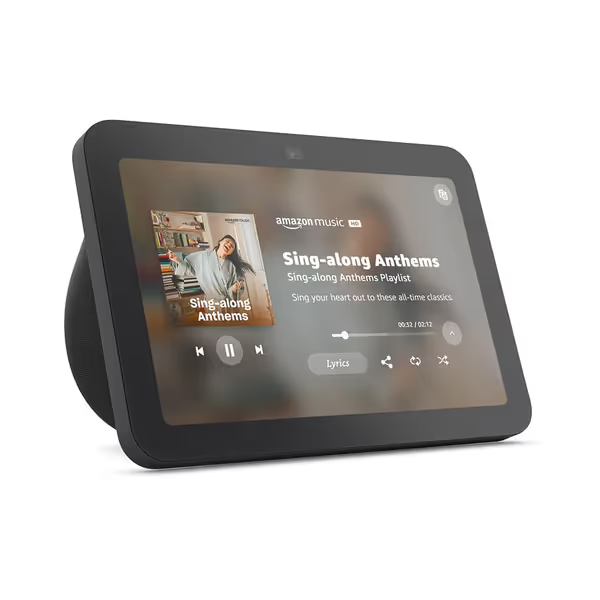
Absolutely, but only with dedicated silicon. Apple's U1 chip (AirPods 3rd gen) and Amazon's AZ2 co-processor handle speech recognition locally using quantized neural nets. During my last internet outage, my Echo Show 8 still managed timers, alarms, and grouped audio playback because Matter's local execution engine kicked in. Cloud-dependent models? Silent. Benchmark: Offline wake-word success should hit 85%+ in 50 dB ambient noise (per EN 50332-3 tests). If your speaker bricks during outages, it's not future-proof.
Beware of "free" voice assistants hiding paywalls. To understand the incentives behind these paywalls, read our smart speaker business model breakdown. Amazon Sidewalk's geofencing? Requires Alexa Plus ($5/month). Google's enhanced voice match for kids? Bundled with Premium subscriptions. Healthy ecosystems offer core personalization without fees: Sonos' voice control groups speakers via AirPlay 2 (no subscription), while Apple's on-device Siri learns routines through Shortcuts. Red flag: If your speaker pushes required subscriptions for basic cross-room announcements or parental controls, it's monetizing interoperability, a technical debt trap.
Don't trust lab demos. Run this 72-hour audit:
Measure, don't guess: sync matters more than flashy features.
Results below 90% accuracy mean your AI is still guessing. My rebuilt network now hits 99.2%, because I prioritized Matter-compliant hardware with wired backhauls, not shiny specs.
Today's AI evolution in smart speakers finally delivers what mattered all along: anticipatory, room-aware intelligence that just works across brands. But true progress isn't measured in new features, it's in milliseconds saved, ecosystems bridged, and birthday toasts preserved. As Matter 2.0 rolls out with encrypted local data sharing, the next frontier is privacy-preserving personalization: learning your routines without phoning home.
Buy once, integrate everywhere, then sleep easy knowing your home adapts, not just reacts.