Smart Speaker Pet Care: Understand Pet Sounds Clearly
3rd Jan•6 min read
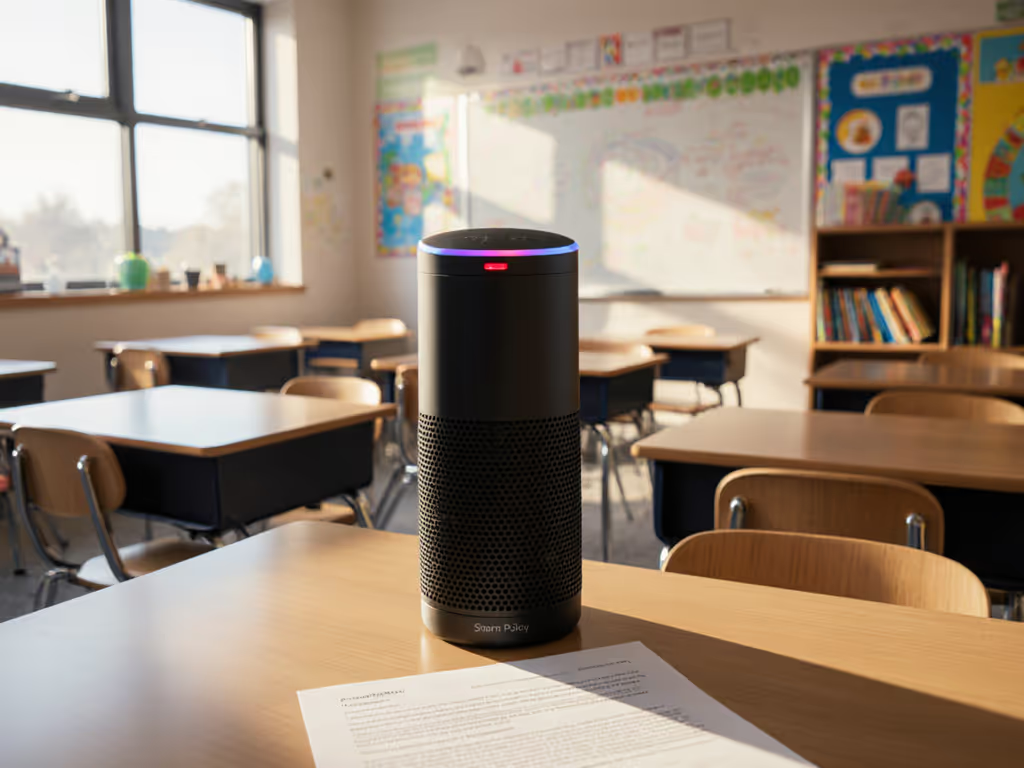
When a third-grader at a school pilot program asked why their classroom's educational voice assistant called them "speed reader," no teacher could explain how it knew. That moment exposed the core flaw in smart speakers in education: systems built on buried toggles and invisible data flows are not just insecure, they are unusable for the very people they are meant to serve. As schools rush to adopt classroom voice technology, they are ignoring a fundamental truth: privacy is a usability feature. If a substitute teacher can't instantly understand what is being recorded and why, it is not private. Period.
Schools aren't living rooms. They are high-stakes environments where accidental recordings could leak IEP details, student anxieties, or bullying incidents. Yet most educational voice assistants operate under the same flawed cloud-first assumptions as consumer models. Let's cut through the hype with actionable fixes schools must implement (before the next data leak makes headlines).
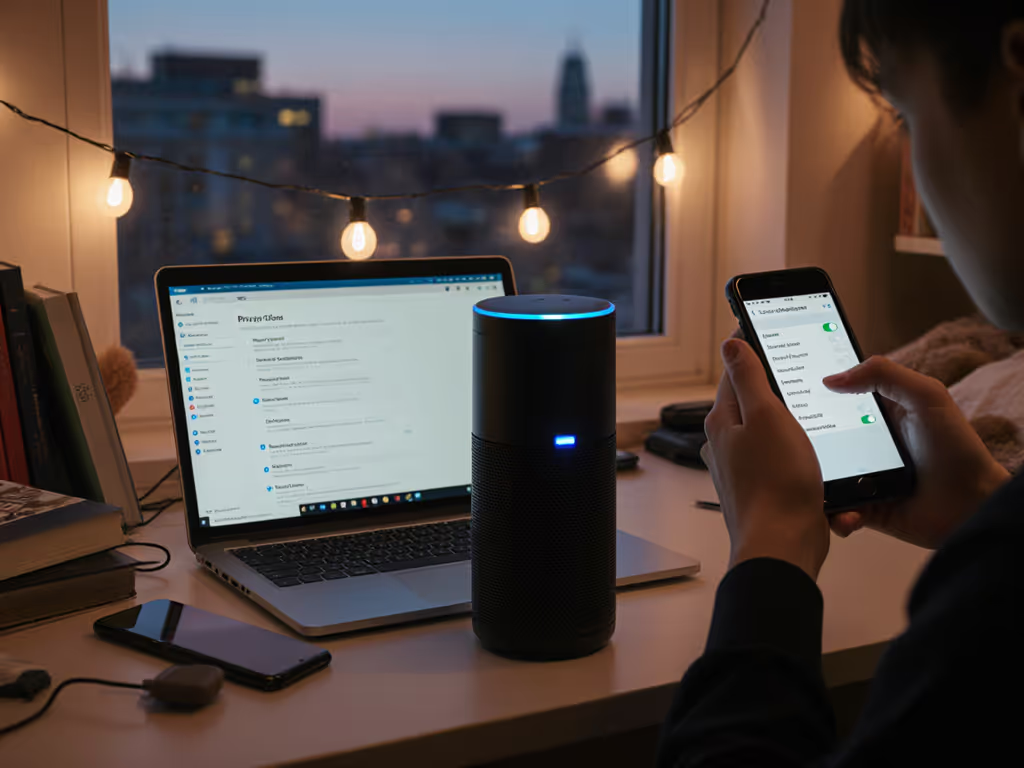
It's the allure of "engagement." Vendors pitch educational technology trends like voice-controlled quizzes or interactive stories as modern pedagogy. Administrators see cost savings over tablets or laptops. But convenience shouldn't override consent. One district's pilot with a Google smart speaker hit a wall when teachers realized student voice data was stored indefinitely by default (even after deleting recordings). Why? Because Google's settings buried the retention policy under three app menus. For a side-by-side view of what each platform actually lets you control, see our smart speaker privacy settings comparison. Local-first defaults would have prevented this. Data you never collect can't leak.
No, but "accidental activations" are rampant. Research confirms devices like Amazon Echo or Google Nest trigger unintentionally up to 19 times daily from TV dialogue, raised voices, or misheard wake words (e.g., "election" activating Alexa). For evidence you can share with administrators, review our voice recognition accuracy tests in real-world noise. In a noisy classroom? That risk multiplies. Worse, schools rarely monitor voice history logs. One librarian discovered her library voice assistant had recorded 47 accidental snippets during a quiet reading hour, including a student's panic attack. Schools assume "mute buttons" work. They don't always. Physical indicators (like hardware-kill switches) are non-negotiable.
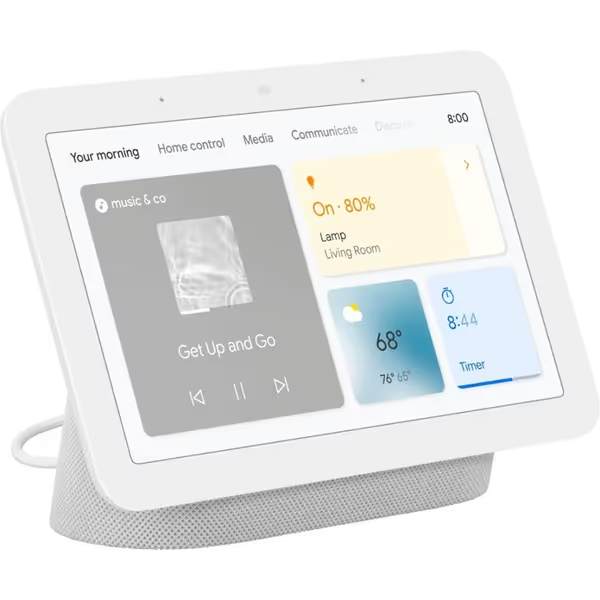
Beyond your contract's fine print. Vendors claim data "improves services," but studies show cloud providers use voice patterns to infer age, emotional state, and language proficiency. When Amazon's Alexa for Education collected classroom queries, it cross-referenced them with Amazon retail purchase histories to build behavioral profiles. Why? To sell more educational subscriptions. To understand the incentives behind this, see how smart speaker platforms make money. Schools rarely audit data flows. Data flow maps should be public, not locked behind NDAs. If a vendor won't spell out retention periods in plain English, walk away.
Paperwork ≠ protection. COPPA compliance often stops at signing a form. But imagine a 7-year-old asking a classroom smart speaker about their parents' divorce. The device records it. The school's "consent" framework didn't anticipate that. True consent-first language means:
When a teacher can't toggle guest mode in under 10 seconds, that's a design failure. For age-appropriate controls and classroom-friendly safety features, see our smart speakers for kids guide. Not a privacy policy.
Demand local processing. Most schools use cloud-dependent devices because vendors hide local capabilities. Use our step-by-step guide to control and delete your voice data on major platforms. For example:
Actionable checklist:
Local-processing emphasis isn't optional, it is legal compliance. Start here:
Transparency you can feel, not just see. One school installed Echo devices with physical microphone covers teachers slid shut during sensitive discussions. Kids noticed. Parents did too. That tactile trust matters more than 10-page privacy policies. Guest mode clarity means:
When a student can confidently explain where their voice goes, you've done it right.
Schools won't ban smart speakers in education, but they must stop treating them as magic boxes. Last year, a district rebuilt their rollout after a student's voice recording surfaced in a targeted ad. Their fix? Local-first defaults for all new deployments. Voice data now lives on school servers for 24 hours max, with deletion logs viewable by parents. Teachers use mute toggles visible from any desk. And students role-play "data detective" to spot privacy flaws.
This isn't about rejecting tech, it is about demanding tools that respect the classroom's humanity. Consent isn't a buried settings toggle. It is lighting up a red light when the mic is live. It is a child knowing exactly why their nickname appears in Alexa's story time. It is relief when the speaker stays silent during whispered confessions.
Data you never collect can't leak. That's not idealism, it is the baseline for ethical educational voice assistants.
Further Exploration